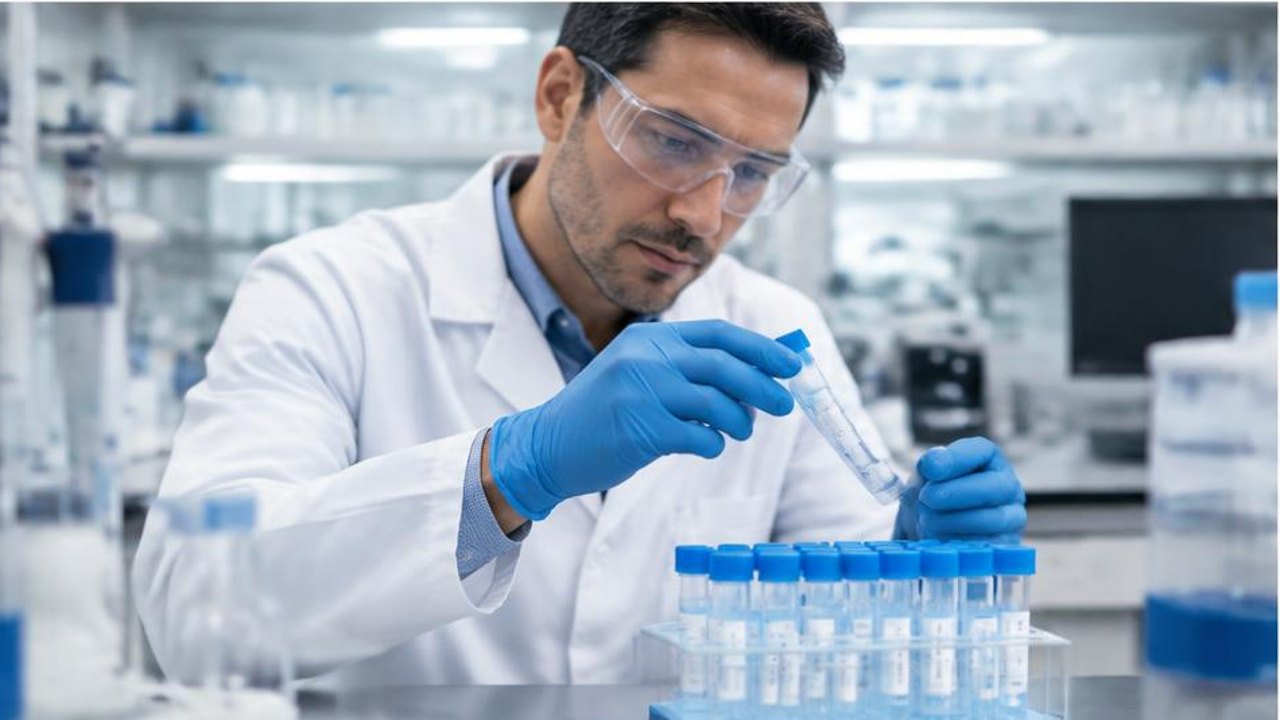


2025 Alcohol Relapse Trial Finds No Significant Psilocybin Advantage
A randomized trial published in 2025 adds an important negative finding to the discussion of psilocybin for alcohol use disorder. The Swiss study found no statistically significant advantage over placebo on its main measures of abstinence and alcohol use. The results appeared in eClinicalMedicine and concern a specific intervention: one psilocybin session combined with brief psychotherapy after withdrawal treatment.
What researchers tested
The single-center, double-blind phase 2 study enrolled people with alcohol use disorder who had completed withdrawal treatment within six weeks before enrollment. Participants were randomly assigned to a single oral dose of psilocybin or a mannitol placebo. Both groups received brief psychotherapy, allowing researchers to compare the addition of psilocybin within that treatment framework.
The reported analysis included 37 participants who completed the four-week follow-up. Eighteen were in the psilocybin group and 19 in the placebo group. The primary outcomes were abstinence and mean alcohol use at four weeks, with participants reporting daily drinking through a timeline followback assessment.
The main findings
The researchers found no statistically significant difference between groups in abstinence duration or mean daily alcohol use at four weeks. The reported P values were 0.55 for abstinence duration and 0.51 for mean alcohol use. The publication also reported no significant advantage on these drinking outcomes at six months.
Participants in both groups reported reductions in craving and temptation to drink after the dosing visit, with an additional reduction observed in the psilocybin group. That finding should be distinguished from the main drinking outcomes. Feeling less craving is clinically relevant to investigate, but it is not interchangeable with demonstrated superiority in abstinence or alcohol consumption.
Why a negative result matters
A field advances when it learns where an intervention does not clearly outperform its comparison, not only where it does. This study challenges any blanket claim that a single psilocybin session reliably prevents relapse after withdrawal treatment. It also makes the research question more precise: which patients, treatment stages, and accompanying therapies might influence outcomes?
The result does not establish that the drug has exactly zero effect. A small trial has limited precision, and absence of statistical significance is not proof that two treatments are equivalent. But uncertainty should not be used to turn an unsuccessful main comparison into a positive efficacy claim.
How it relates to earlier alcohol research
A 2022 randomized trial in JAMA Psychiatry reported a reduction in heavy drinking with psilocybin-assisted psychotherapy compared with an active placebo. That study involved a different protocol, including two medication sessions and a more extensive psychotherapy program. Its results and the 2025 findings should not be treated as tests of an identical intervention.
The populations and treatment aims also matter. Preventing relapse after withdrawal treatment is not necessarily the same clinical task as reducing heavy drinking within another treatment pathway. Comparing studies requires attention to enrollment criteria, timing, psychological support, medication sessions, and the outcome chosen as primary.
What patients should take from the study
The practical message is not that established alcohol care should be abandoned in favor of waiting for psychedelic research. It is that psilocybin remains a research question for this particular use, and encouraging accounts from another protocol cannot promise an individual result. Anyone considering participation should understand the exact intervention being tested.
- Look beyond craving: Ask whether a study improved drinking outcomes as well as subjective measures.
- Check the treatment stage: Results after withdrawal may differ from results in other settings.
- Check the whole package: Session number and psychotherapy are part of the intervention.
- Preserve the uncertainty: A small negative study is informative without being definitive.
For future research, the study supplies a boundary rather than a verdict on every possible application. Larger, carefully designed comparisons can test alternative protocols. Until then, the reported main result should remain visible: this single-dose intervention did not significantly outperform placebo on the principal drinking outcomes.
Sources
Frequently Asked Questions
- What did the 2025 alcohol relapse trial find?
- It found no statistically significant differences between psilocybin and placebo in abstinence duration or mean alcohol use at the reported main follow-up.
- How many participants were included in the main analysis?
- The analysis included 37 participants who completed the four-week follow-up: 18 receiving psilocybin and 19 receiving placebo.
- Does this prove psilocybin cannot help alcohol use disorder?
- No. It is evidence about a particular single-dose protocol after withdrawal treatment, not every possible psilocybin intervention.
Written by
Psilocybin News Editorial Team
The Psilocybin News editorial team covers psychedelic science, clinical research and policy, translating peer-reviewed evidence into clear, accurate reporting for patients, families and professionals.
 PreviousAntidepressants and Psilocybin Trials: Why Medication Changes Need Medical Oversight
 NextResponse, Remission, Relapse: Decoding Psilocybin Depression Results